
Last Updated: October 26, 2026
Quick Summary
The best snowboard brands beginners should consider are Burton, Nitro, CAPiTA, Arbor, and Jones. Each brand excels in different areas: Burton offers maximum forgiveness for absolute beginners, Nitro provides budget-friendly performance, CAPiTA focuses on progression potential, while Arbor and Jones deliver all-mountain versatility.
- Burton is best for absolute beginners who want boards that forgive mistakes and reward progress.
- Nitro offers budget-conscious riders quality performance without sacrificing value.
- CAPiTA boards are designed to grow with you beyond your first season.
- Arbor and Jones excel for beginners wanting to explore beyond groomed terrain.
- Beginner boards should have soft flex ratings of 1-3 for maximum forgiveness.
Table of Contents
- Best Snowboard Brands for Beginners: Quick Comparison
- Burton: Training-Wheels Boards Built for New Riders
- Nitro: Budget-Friendly Beginner Snowboards Without Compromise
- CAPiTA: Progression-Focused Boards That Grow With You
- Arbor and Jones: All-Mountain Versatility for Beginner Explorers
- Best Beginner Snowboards by Riding Style and Terrain
- Choosing the Best Snowboard Package for Beginners
- Snowboard Size Chart for Beginners and Fit Essentials
- Frequently Asked Questions
Best Snowboard Brands for Beginners: Quick Comparison
When you’re learning to snowboard, choosing among snowboard brands beginners trust makes all the difference. The right choice means faster progression, fewer frustrations, and more days actually enjoying the mountain instead of fighting your equipment.
This guide covers the five best snowboard brands for beginners and how to choose between them based on your riding style. We’ll also walk you through sizing and the rental-versus-buying decision, so you can hit the slopes with confidence.
How We Evaluated These Brands
We looked at several key factors to identify the best snowboard brands beginners should consider:
Board Forgiveness, Does the board absorb mistakes and still let you progress? Beginner boards need soft flex and rocker profiles that make turning easier.
Edge Control, Can you initiate turns and hold an edge on groomed terrain without the board washing out? This matters on day one.
Progression Potential, Will you outgrow this board in two seasons, or can it grow with you into intermediate terrain?
Value, Are you getting quality construction and real performance, or just a budget price tag?
Availability, Can you actually rent or buy this brand locally, or are you ordering from across the country?
Burton: Training-Wheels Boards Built for New Riders
Best for: Absolute beginners who want a board that forgives mistakes and rewards progress.
Skip if: You’re already comfortable on intermediate terrain or you prioritize freestyle tricks over all-mountain riding.
Nitro: Budget-Friendly Beginner Snowboards Without Compromise
Best for: Budget-conscious riders who don’t want to sacrifice performance for price.
Skip if: You’re renting instead of buying, rental shops rarely stock Nitro boards.
CAPiTA: Progression-Focused Boards That Grow With You
Best for: Beginners who plan to ride more than one season and want a board that grows with them.
Skip if: You’re renting for a single trip or you want maximum forgiveness on day one.
Arbor and Jones: All-Mountain Versatility for Beginner Explorers
Best for: Beginners who want to explore beyond groomed terrain and aren’t intimidated by variable snow.
Skip if: You want maximum forgiveness or you’re spending your first day on bunny hills.
Best Beginner Snowboards by Riding Style and Terrain
Choosing a snowboard brand isn’t just about overall quality.
Groomer-Only Riders,
Powder and Variable Snow,
Terrain Park Interest,
All-Mountain Exploration,
Choosing the Best Snowboard Package for Beginners
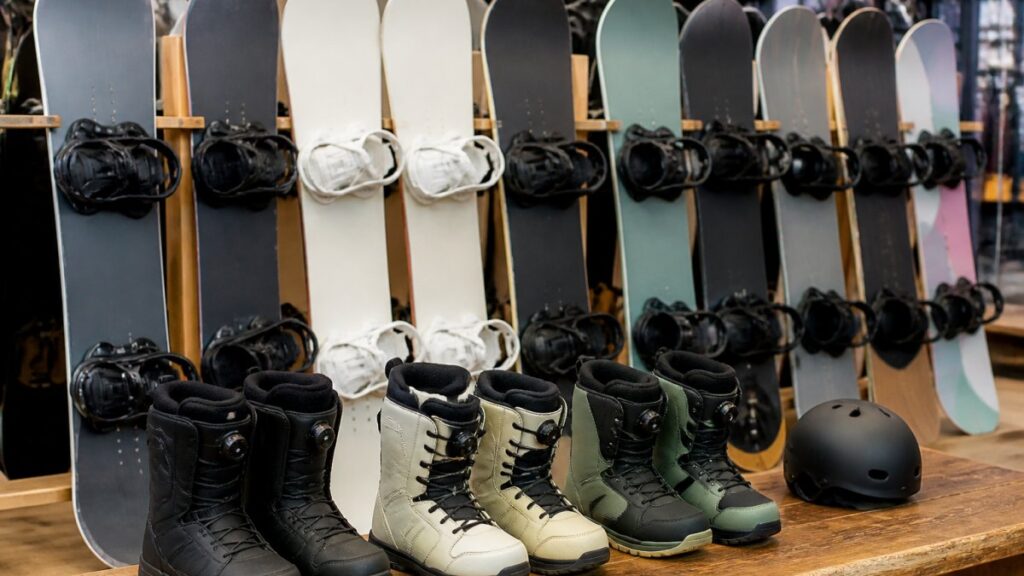
A board is only part of the equation. The fit of boots, bindings, and a helmet matters. Explore snowboard rental packages that include properly fitted gear to get started without the commitment of buying.
Rental vs. Buying,
Boot Sizing, This is where most beginners go wrong. Boots that are too loose cause ankle fatigue and poor control. Boots that are too tight cut off circulation and cause pain (Evaluating wrapping alpine ski boots during on-snow carving). How to size snowboard boots for maximum comfort and control? walks you through proper fitting. Understanding the basics helps you communicate what feels right.
Binding Compatibility, Your bindings need to match your boots and your board’s mounting pattern. If you’re buying separately, verify compatibility before ordering.
Helmet and Protection,
Snowboard Size Chart for Beginners and Fit Essentials
Board size matters more than most beginners realize. A board that’s too long is hard to turn. A board that’s too short doesn’t float in powder and feels twitchy. The right size depends on your height, weight, and riding style.
How to use the snowboard size chart and what other issues to consider when choosing your board for maximum safety and enjoyment covers sizing in detail, but here’s the quick version:
Height and Weight, Most snowboard size charts use both metrics. A 5’8″ rider weighing 150 pounds needs a different board than a 5’8″ rider weighing 200 pounds. Charts typically show a range of 3-4 inches within which you can choose based on preference.
Riding Style, Freestyle riders often go shorter for easier tricks. All-mountain riders go longer for stability at speed. Beginners should aim for the middle of the recommended range.
Stance Width, Your boots need to fit on the board’s bindings without your toes or heels hanging over the edge. Overhang causes toe and heel drag, which kills your turns. If you’re buying, measure your boot sole length and verify it fits the binding range on your chosen board.
Flex Rating, Beginner boards range from soft (1-3 flex) to medium (4-6 flex). Softer is more forgiving; medium gives you more control and progression potential. Most beginners should start soft and move up as their technique improves. Learn practical snowboarding tips for beginners to master the fundamentals on the slopes.
| Factor | Beginner Priority | What It Affects |
|---|---|---|
| Board Length | High | Turn radius and stability |
| Flex Rating | High | Forgiveness and control |
| Boot Size | High | Comfort and edge control |
| Binding Compatibility | High | Safety and performance |
| Board Shape | Medium | Terrain versatility |
| Profile Type | Medium | Learning curve vs. progression |
Frequently Asked Questions
What is the best snowboard brand for beginners?
The best choice depends on your budget, riding style, and whether you prioritize forgiveness or growth potential.
What should I buy as a beginner snowboarder?
Start with a complete package: a soft-flex beginner snowboard, bindings matched to your boot size, properly fitted boots, and protective gear (helmet, wrist guards). A soft-flex board offers better edge control and maneuverability on groomers. Bindings should be compatible with your boots. Many beginners benefit from renting first to test different styles before investing in a full setup. Consider your height, weight, and riding terrain when selecting board length and flex.
Should a beginner snowboarder buy or rent a snowboard?
Renting lets you try different brands and board styles without a large upfront investment. Once you’ve committed to the sport and know your preferences, buying becomes worthwhile. Buying offers consistency and lets you dial in your setup.
How do I choose the right snowboard size as a beginner?
Snowboard length is based on rider height and weight. Most sizing charts show that riders 5’6″ to 5’10” typically use boards 148-156 cm long; shorter or lighter riders go smaller, taller or heavier riders go larger. Stand the board upright: it should reach between your chin and nose. A smaller board is easier to turn and control; a larger board offers more stability at speed. Always check the manufacturer’s size chart and consult with rental or shop staff to confirm the right fit for your body and skill level.
What snowboard features make learning easier?
Soft flex (rated 2-5 on a 1-10 stiffness scale) forgives mistakes and makes turning easier. Rocker or hybrid profiles reduce edge catch, a common beginner frustration. A directional or directional-twin shape provides stability and control. Wider waists accommodate larger boot sizes without toe or heel drag. All-mountain boards offer versatility across terrain types. Forgiving construction with rounded edges helps beginners progress faster and enjoy the learning process without fighting the equipment.
