

Table of Contents
- How to Prepare for a Ski Trip: A Step-by-Step Timeline
- Ski Exercises to Prepare for Skiing: Build Strength and Endurance
- What to Pack for a Ski Trip: Clothing and Gear by Conditions
- Ski Equipment Rental Tips: How to Choose and Book
- How Many Days for a Ski Trip? Finding Your Ideal Length
- On-Mountain Safety and Altitude Readiness
- Conclusion: Your Ski Trip Preparation Checklist
- Frequently Asked Questions
Last Updated: October 13, 2026
How to Prepare for a Ski Trip: A Step-by-Step Timeline
Learning how to prepare for a ski trip comes down to one principle: start early, train specifically, and treat gear, logistics, and altitude as parts of the same plan. At Carver’s Ski and Bike, we’ve watched too many visitors arrive in Breckenridge undertrained and overpacked, then spend their first two days adjusting instead of skiing. The fix is simple: build a timeline, train the right muscles, and lock in your rental gear before you travel.
Ski trip preparation is the process of physically training, booking equipment and lodging, packing for conditions, and planning on-mountain logistics before departure so your first day on snow is productive rather than painful. Most travelers spend their effort on flights and lodging and almost none on their legs, which is exactly backwards.
Here’s what most guides get wrong: they treat preparation as a packing list. It isn’t. Your legs, lungs, and balance decide how much of your trip you actually enjoy.
The 8-Week Countdown
Eight weeks out is the right time to start. That gives you enough runway to build leg endurance without overtraining, and enough time to reserve rentals before peak-season inventory tightens.
Weeks 8 through 5: begin strength work three times per week and book your lodging and lift tickets. Weeks 4 through 2: add balance and mobility work, confirm your rental reservation, and start gathering layers. The final two weeks: shift toward shorter, sharper sessions and stop adding new exercises.
- Reserve ski or snowboard rentals online
- Book lodging and confirm travel dates
- Begin strength training three times per week
- Check that jackets, pants, and goggles still fit
- Schedule any necessary equipment fittings
If you’re flying in, reserve gear before you book flights. Rental inventory in a destination town moves fast during holiday weeks, and the best-fitting equipment goes first.
The Final Week
Taper, don’t cram. Drop to two light sessions, prioritize sleep, and stop any exercise that leaves you sore for more than a day.
Pack by activity rather than by category: base layers first, then insulation, then shell. Confirm your rental pickup time and location so your first morning isn’t spent driving around. Hydrate consistently in the days before travel, because altitude hits dehydrated bodies harder.
Watch Out
The most common final-week mistake is cramming hard workouts to “get ready.” Arriving with fatigued legs means your first ski day ends early. Taper instead.
Ski Exercises to Prepare for Skiing: Build Strength and Endurance
Ski exercises to prepare for skiing should mirror what the sport demands: sustained quad and glute work, controlled eccentric loading, and balance under fatigue. Skiing is not a sprint. It’s hours of repeated squatting with your weight shifting side to side, which is why endurance matters as much as raw strength.

Leg Strength and Endurance
Build leg endurance with bodyweight movements you can do at home. Three sets of each, two to three times per week, is enough to start.
- Wall sits: 3 sets of 45-60 seconds
- Bodyweight squats: 3 sets of 15-20 repetitions
- Leg blasters: 3 sets of 10 squats, 10 lunges, 10 jump lunges
- Calf raises: 3 sets of 20
- Box jumps: 3 sets of 8, only if your knees tolerate impact
Romanian deadlifts with light dumbbells train the hamstrings and glutes that protect your knees on steep terrain. Add them twice weekly if you have weights available.
Core Stability and Balance
A stable core keeps your upper body quiet so your legs can work. Planks, side planks, and leg lifts cover most of what you need.
Balance drills matter more than most people expect. Stand on one foot while brushing your teeth, then progress to standing on a pillow. Single-leg balance is the closest at-home approximation of a ski turn’s weight transfer.
Warm-Up and Mobility
Warm up for five to ten minutes before every session. Hip openers, ankle circles, and gentle spinal rotations restore the range of motion that ski posture demands.
Ski posture is a stacked, athletic stance: ankles flexed, knees bent, hips back, chest tall, hands forward. Stretching your hip flexors and calves makes holding that position possible for a full day rather than an hour.
Pro Tip
Train the eccentric phase. Lower into your squats over three seconds instead of dropping fast. Skiing loads your quads while they lengthen, and that’s the contraction that leaves people sore.
What to Pack for a Ski Trip: Clothing and Gear by Conditions
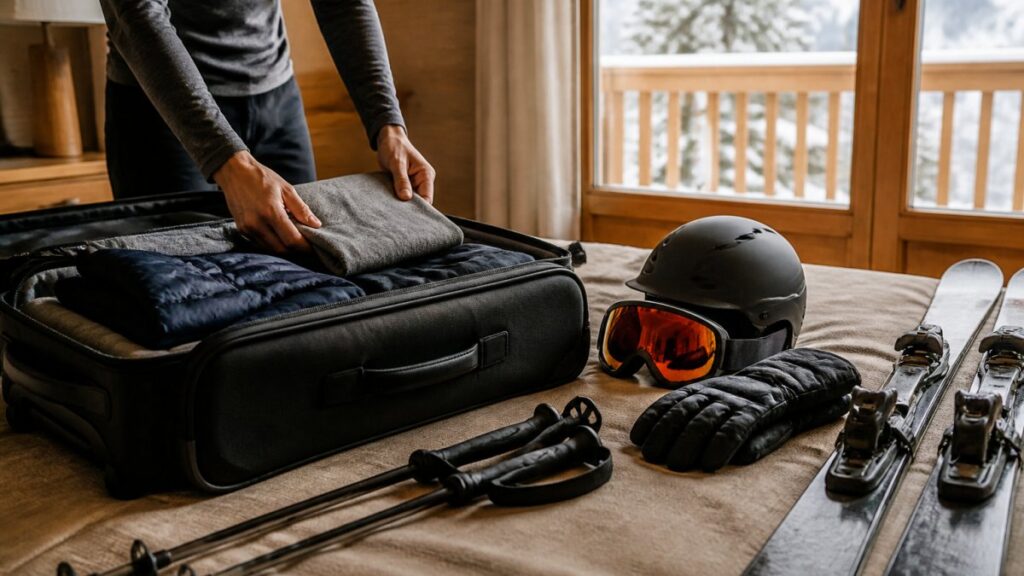
Pack in three layers and let the weather decide the thickness, not the quantity. Thermal base layers move sweat away from your skin, a midlayer traps warmth, and a waterproof jacket and waterproof pants block wind and wet snow.
| Condition | Base Layer | Midlayer | Shell | Extras |
|---|---|---|---|---|
| Cold and clear | Heavyweight thermal | Fleece or puffy | Insulated shell | Balaclava, hand warmers |
| Snowing, moderate | Midweight thermal | Light fleece | Waterproof shell | Spare gloves, goggle wipe |
| Warm spring | Lightweight thermal | None | Uninsulated shell | Light gloves, sunscreen |
| Windy and icy | Midweight thermal | Fleece | Windproof shell | Face covering, neck gaiter |
On the mountain. Do not forget ski socks, ski gloves, ski goggles, and a helmet. Bring two pairs of gloves so one can dry overnight, and never wear cotton socks, which hold moisture and cause blisters.
Off the mountain. Pack for the resort town, not just the slopes. Bring a warm hat, a casual jacket, and shoes with traction for icy sidewalks. Swimsuits matter if your lodging has a hot tub, which most ski towns do.
Quantities that actually work. Bring one more base layer than days you plan to ski, since you will sweat through them. Two midlayers is enough for a week. One shell, one pair of ski pants, and one helmet cover the whole trip.
Changing weather. Mountain forecasts shift hour to hour. Check the resort’s snow report each morning and adjust layers before you leave the lodge.
Key Takeaway
Layering beats bulk. Three thin layers regulate temperature better than one heavy jacket, and you can shed a layer at lunch without ending the day cold. Pack by activity, not by category, and you will stop overpacking.
Ski Equipment Rental Tips: How to Choose and Book
Book rentals online before you travel, and choose a shop that asks about your skill level. Ski equipment rental tips that actually matter come down to fit, condition, and timing: reserve early, get fitted in person, and match the gear to the terrain you’ll actually ski.
Demo and performance-level gear suits advanced skiers pushing steep terrain. Sport-level gear suits beginners and intermediates who want predictable, forgiving turns. Families with mixed abilities should reserve per person rather than per group, because a beginner child and an advanced adult need entirely different setups.
Ask two questions before you book anywhere:
- Does the shop fit each skier individually, including boot sizing?
- Can you swap gear mid-trip if conditions change or a ski isn’t working for you?
For out-of-state visitors who love their own skis, renting avoids airline baggage fees and the risk of damaged equipment. Boots are the one item worth considering buying, since fit matters more than anything else.
At Carver’s Ski and Bike, our online booking system lets you reserve demo, performance, or sport-level gear before you arrive, and our local experts match equipment to your skill level and the day’s conditions.
How Many Days for a Ski Trip? Finding Your Ideal Length
Three to five ski days is the sweet spot for most travelers. Three days suits a first ski season or a quick getaway, five days gives intermediates enough time to improve noticeably, and anything past six days tends to produce fatigue unless you build in rest days.
Beginners should plan shorter days on the mountain and expect to be tired by early afternoon. Advanced skiers recover faster and can handle consecutive full days. Families with young children do better with a rest day in the middle.
If you’re traveling a long distance, add a buffer day on each end. Travel delays and altitude adjustment both eat into your first day.
On-Mountain Safety and Altitude Readiness
Altitude is the factor most visitors underestimate. Breckenridge sits high enough that many travelers feel short of breath on arrival, and symptoms often peak in the first 24 to 48 hours.
Give yourself a day to adjust before skiing hard. Drink more water than usual, limit alcohol for the first night or two, and eat regular meals. If you feel a headache, nausea, or unusual fatigue, descend and rest rather than pushing through.
On the mountain, follow the responsibility code: stay in control, yield to people downhill, and stop where you’re visible. Wear a helmet. Ski with a partner and agree on a meeting point in case you get separated. Warm up on an easier run before heading to steeper terrain, and stop skiing when your legs get sloppy. Most injuries happen on the last run of the day, when fatigue overrides technique.
Conclusion: Your Ski Trip Preparation Checklist
The challenge with ski trip preparation isn’t knowing what to do. It’s doing it early enough to matter.
Carver’s Ski and Bike can take equipment off your list entirely. As a family-owned shop in Breckenridge since 1995, we offer demo, performance, and sport-level rentals for every skill level, an online booking system that gets you on the snow faster, and local experts who match gear to your ability and the day’s conditions. Get started with Carver’s Ski and Bike and reserve your gear before the season fills up.
Frequently Asked Questions
What do you need to go skiing for the first time?
For your first ski trip, you’ll need a few essentials. Rent skis, boots, and poles from a local shop to ensure proper fit. Wear waterproof pants and a jacket, thermal base layers, ski socks, gloves, and goggles. A helmet is strongly recommended for safety. Many resorts rent helmets too. Bring sunscreen and lip balm because sun reflects off the snow. Finally, book a lesson to learn the basics and stay safe on the slopes.
How long is enough for a ski trip?
A 3-day ski trip works for a quick getaway, but 5 to 7 days gives you time to adjust to the altitude, ski multiple days, and explore the town. Beginners often find 3 to 4 days sufficient to learn basics without getting exhausted. If you’re traveling far, a week lets you ski at a relaxed pace and enjoy other activities. Consider your fitness level and how many days you can ski before fatigue sets in.
What exercises can I do to prepare for skiing?
Focus on leg strength, core stability, and balance. Try squats, lunges, Romanian deadlifts, and wall sits to build leg endurance. Planks and leg lifts strengthen your core. Box jumps and calf raises improve power and agility. Practice single-leg balances to enhance stability. Start 6 to 8 weeks before your trip, doing 2 to 3 sessions per week. Warm up with dynamic stretches before each workout.
What should you pack for a ski trip?
Pack thermal base layers, a waterproof jacket and pants, insulating mid-layers, ski socks, gloves, goggles, and a helmet. Bring sunscreen, lip balm, and hand warmers. For apres-ski, pack casual clothes and comfortable boots. Don’t forget sunglasses, a swimsuit if your hotel has a hot tub, and a small backpack for the slopes. Check the weather forecast to adjust for cold or warm conditions. Rent bulky gear like skis and boots locally.
Should you rent or buy ski equipment for your first trip?
Renting is almost always better for your first trip. It lets you try different skis and boots without a big investment, and you avoid the hassle of traveling with gear. Rental shops also maintain equipment and can adjust it to your skill level. If you ski more than a few times a season, buying might make sense, but start with rentals to see what you like. Many shops offer demo packages for trying high-performance gear.
How far in advance should you prepare for a ski trip?
Start preparing 8 to 12 weeks before your trip. Begin a fitness routine 6 to 8 weeks out to build strength and endurance. Book rentals and accommodations 4 to 6 weeks ahead, especially during peak season. Pack your bags a week before, and check the weather forecast a few days prior. This timeline helps you avoid last-minute stress and ensures you’re physically ready for the slopes.