

Last Updated: November 15, 2026
Quick Summary
The best ski resort snacks for energy are ones you can carry easily, eat with cold hands, and that still taste good when frozen. Granola bars, trail mix, and dried fruit suit most skiers. Pairing quick carbs with a little protein keeps energy steady through the afternoon.
- Pick snacks that are portable, since snacks you cannot reach easily often go uneaten.
- Keep snacks in an inside pocket so body heat stops them from freezing solid.
- Choose dried fruit and nut-butter packets over soft cheese or fresh apples in cold weather.
- Eat small snacks every hour or so rather than one big lunch.
- Keep each snack under about 250 calories so it digests quickly.
Table of Contents
- Portable Ski Snacks That Fit a Pocket or Backpack
- High-Protein Snacks for Skiing Energy
- Quick-Carb and Sweet Snacks for Sustained Energy
- Best Ski Snacks for Kids
- Snacks That Do Not Freeze in Winter
- Timing Your Snacks and Staying Hydrated on the Mountain
- Booking Your Rental Gear Before You Hit the Slopes
- Frequently Asked Questions
Most skiers pack lunch and forget about the ski resort snacks. That is a mistake. A full day on the mountain burns a lot of energy, and the food you eat between runs decides whether your legs still feel strong at 3 p.m. Ski resort snacks for energy are not a minor detail. They shape the whole day.
Skiing is physically demanding, and the cold makes it harder. Your body works to stay warm, which uses fuel even when you are standing still on a chairlift. Eating small amounts through the day keeps blood sugar steadier than one big lunch does. A heavy meal at noon can leave you sluggish for the afternoon.
Here is the practical takeaway: the best snack is one you will actually eat, can carry easily, and that still tastes good when it is cold. Those three factors matter more than any single nutrition label.
Portable Ski Snacks That Fit a Pocket or Backpack
Portability is the first thing to check when choosing ski resort snacks. If a snack is hard to reach, you will skip it. Pocket-sized options work best because you can eat them on a chairlift without removing a glove.
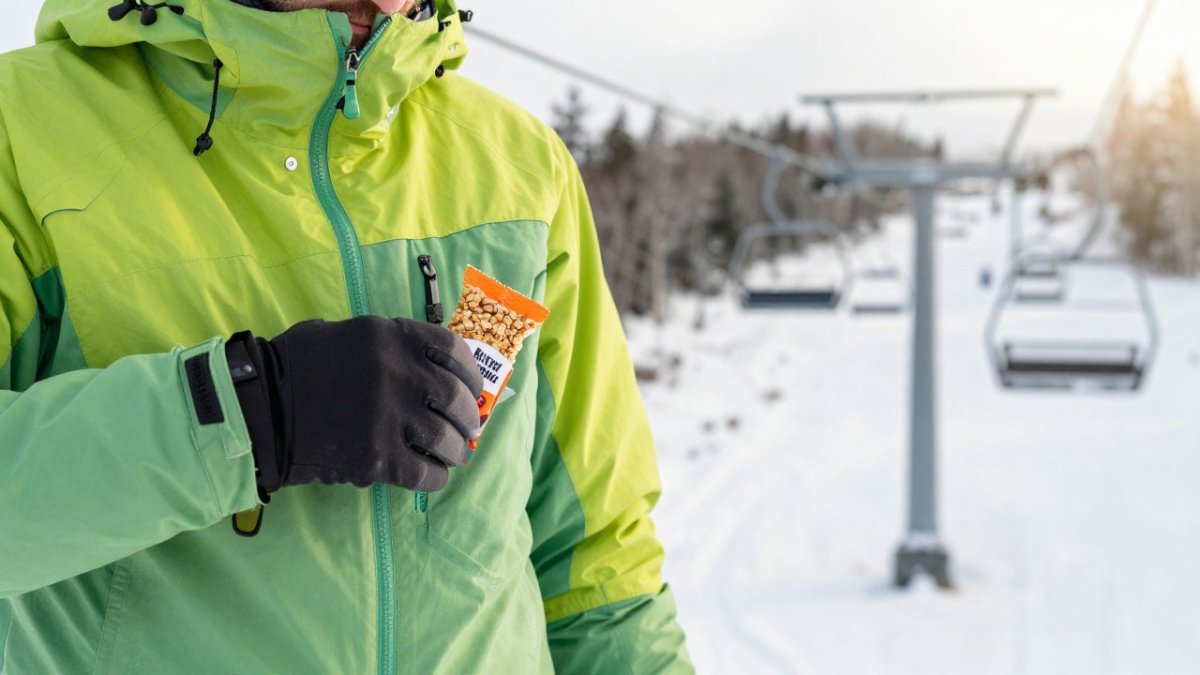
- Granola bars. Compact, familiar, and easy to open with cold fingers. Check the wrapper for a resealable tab if you plan to split one between runs.
- Trail mix. Nuts, seeds, and dried fruit pack small and hold up well in a jacket pocket. Cherries and almonds are a common favorite.
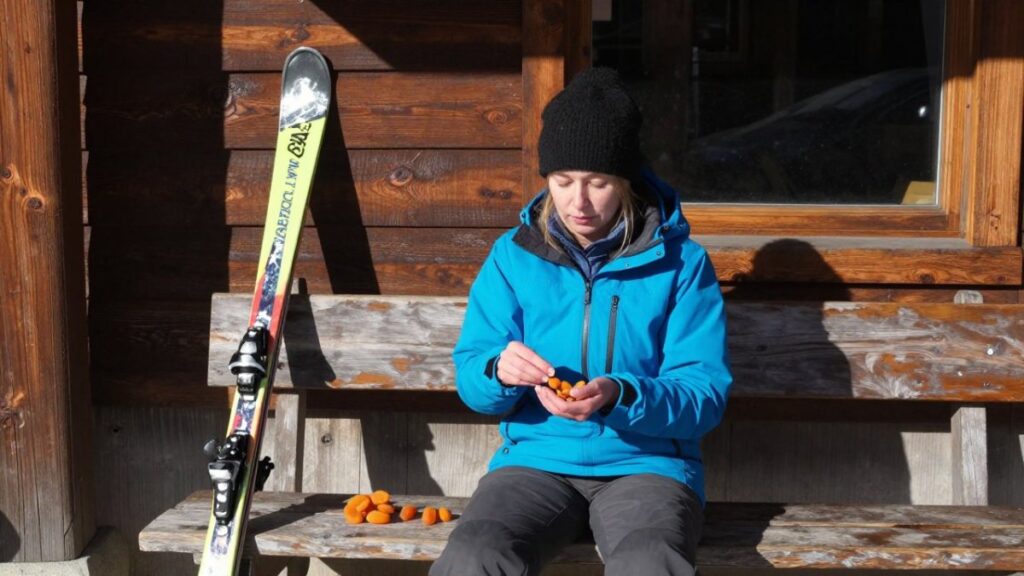
- Dried fruit. Dates, apricots, and raisins give quick sugar with almost no weight.
- Energy chews and gels. Very small and fast to eat, though they are best kept for hard efforts rather than casual snacking.
Pros and cons for portability:
- Bars: Light and compact, but some melt into a sticky mess if left in a warm pocket.
- Trail mix: Easy to portion, though crumbs collect at the bottom of a pack.
- Dried fruit: Shelf-stable and light, but it can be chewy when frozen.
Keep your ski resort snacks in an inside pocket where body heat helps. Snacks left in an outer pocket can freeze solid by mid-morning.
High-Protein Snacks for Skiing Energy
Protein will not give you instant energy the way carbohydrates do, but it can help with muscle recovery and keeps you full longer.
Protein bars vary widely in protein content, so read the label. Compare servings, not just package size.
Pros and cons for shelf-stability:
- Protein bars: Long shelf life and easy to pack, but some get hard in the cold.
- Hard-boiled eggs: High in protein and filling, but they need refrigeration and are not ideal for a full day outside.
- Cheese sticks: Portable and salty, though they can become firm in freezing temperatures.
A common approach is pairing protein with carbohydrates, such as a bar with a piece of fruit, so you get both steady energy and fullness.
Quick-Carb and Sweet Snacks for Sustained Energy
Carbohydrates are the body’s quickest fuel source, which makes them useful during long runs or when energy dips, and they are the backbone of most ski resort snacks. Sweet snacks deliver that fast boost.
- Chocolate. Dense calories in a small piece. Milk chocolate melts easily in warm pockets, so dark chocolate often holds up better.
- Dried fruit. Natural sugars with fiber to slow absorption.
- Pretzels and crackers. Starchy and salty, which can help replace sodium lost while sweating.
- Sandwiches. More substantial than a bar, good for a longer lunch break.
The trade-off is that very sweet snacks can cause a sharp energy spike followed by a drop. Mix sweet items with something more filling so the afternoon stays steady.
Best Ski Snacks for Kids
Children burn energy quickly and often need food more frequently than adults. Keep snacks simple, colorful, and easy to share.
- Fruit pouches or fresh apple slices, which are less likely to crumble.
- Cheese sticks and whole-grain crackers for a salty, filling option.
- Small containers of trail mix with no large pieces that could cause choking.
- Chewy granola bars that children can eat with mittens on.
Pack more ski resort snacks than you think you need. Kids tend to finish their food quickly, and a sudden energy crash can end a family’s day early. Check labels for nut content if any child has an allergy, and pack allergy-safe options with clear labeling.
Snacks That Do Not Freeze in Winter
Cold-weather texture is the part of snack planning most lists skip. A snack that turns rock-hard at 20°F is not a snack; it is a hazard. The fix is part food choice and part packing mechanics, and both are learnable.
Why snacks freeze the way they do. Water content drives the problem. Foods with high water activity, fresh apples, oranges, cheese sticks, yogurt-covered anything, form ice crystals that make them brittle or unpleasantly grainy.
Snacks that hold up best below freezing:
- Nut butter packets and nut-butter-filled bars. Fat stays semi-soft and the sealed pouch protects texture. Squeeze packs are easier than jars with cold hands.
- Dried fruit without added moisture. Dates, figs, raisins, and apricots stay chewy because their sugar concentration lowers the freezing point. Avoid “soft and juicy” dried fruit packed with extra water.
- Hard cheeses and cured meat sticks. Lower moisture than soft cheese, so they firm up rather than freeze solid. Pre-slice at home so you are not wrestling a block with gloves on.
- Dark chocolate and chocolate-covered nuts. Higher cocoa percentage means a higher melting point and less shatter. Milk chocolate and chocolate-covered pretzels crack and crumble.
- Pretzels, crackers, and plain cookies. Already dry, so cold does not change them much, the risk is crushing, not freezing.
- Energy chews. Most stay soft enough to bite at typical mountain temperatures, though they get firmer the colder it is. Gels thicken but remain squeezable.
Snacks that fail in the cold:
- Fresh fruit with high water content, apples and grapes become icy and hard to bite.
- Soft cheese, yogurt, and pudding cups, texture turns grainy and the packaging can split.
- High-moisture baked goods like muffins and soft sandwich bread, they freeze firm and thaw to a soggy texture.
- Anything with a yogurt or chocolate coating that cracks and flakes off.
Packing mechanics that matter more than the food. Body heat is your best insulator. Put the snack you plan to eat first in the chest pocket and rotate as the day goes. An insulated soft pouch adds another layer without much bulk.
Watch out: a bar that froze solid in an outer pocket will not soften quickly once you bring it inside, bite-sized pieces thaw faster than a whole bar, so break bars up before you head out and keep the pieces in a sealed bag.
A quick field test. Before you commit a snack to a full day, put it in the freezer for two hours, then try to open and bite it with gloves on. If you cannot, it does not belong in an outer pocket. Most practitioners find that the snacks that pass this test are the same ones that survive a real powder day.
Timing Your Snacks and Staying Hydrated on the Mountain
Most snack guides tell you what to eat and stop there. When and how much matter just as much, especially at altitude, where appetite and thirst signals are unreliable.
A practical eating cadence. Hunger is a lagging indicator, by the time it shows up, blood sugar has already dipped and your legs have lost a step. A workable day looks like this:
- First chair to mid-morning: one quick-carb snack, roughly 100 to 200 calories, such as half a granola bar or a handful of dried fruit.
- Mid-morning to lunch: a snack with carbs plus a little protein or fat, roughly 150 to 250 calories, such as a nut-butter packet with a few crackers.
- Lunch: a real meal if you are stopping, kept moderate rather than heavy, a large, greasy lunch is what puts skiers on the couch at 2 p.m.
- Afternoon: repeat the 60-to-90-minute cadence with smaller portions, since fatigue makes heavy food less appealing.
Hydration is the part skiers skip. Cold suppresses thirst, dry mountain air pulls moisture from every breath, and heavy breathing at altitude increases fluid loss.
Electrolytes deserve a mention. Sweat loss carries sodium and potassium, and at altitude you lose more fluid per breath than at sea level.
Food safety in the cold. Cold is generally your friend for food safety, but not always.
Watch out: caffeine and alcohol both work against hydration on the mountain, a morning coffee is fine, but treating a beer at lunch as fluid replacement is how an afternoon gets cut short.
A simple day plan. Two or three small snacks in the chest pocket, one larger snack or sandwich in the pack, a water bottle or hydration pack you actually drink from, and an electrolyte source for long or warm days. That combination covers energy, fluids, and the altitude factor that most snack lists ignore.
The article recommends a snack cadence and portion sizes, summarised below.
| Time on the mountain | Snack size | What to eat |
|---|---|---|
| First chair to mid-morning | 100 to 200 calories | Half a granola bar or a handful of dried fruit |
| Mid-morning to lunch | 150 to 250 calories | Nut-butter packet with a few crackers |
| Lunch | Moderate meal | A real meal, kept moderate rather than heavy |
| Afternoon | Smaller portions | Repeat the 60-to-90-minute cadence |
| Each snack | Under about 250 calories | Digests quickly and sits lighter on the next run |
Booking Your Rental Gear Before You Hit the Slopes
Good snacks cannot make up for ill-fitting equipment. If your skis or boots do not fit, a great energy plan will not save your day. Reserve your gear before you arrive so you can skip the line and get on the snow sooner.
Carver’s Ski and Bike offers ski and snowboard rentals in Breckenridge, and you can book equipment through our online system before you pack your ski resort snacks. Find ski helmet rentals for a safer day on the slopes. Browse ski jacket and bib rentals to plan your apparel too.
For a full day of skiing, pack a few snacks in your jacket, plan a bite every hour or so, and keep water handy. The right ski resort snacks and the right gear together make the difference between a long, tiring day and one you want to repeat.
Frequently Asked Questions
What is the best snack to have on a ski day?
Portable options that combine carbohydrates with some protein tend to work best on a ski day. Granola bars, trail mix with nuts and dried fruit, and bananas are easy to carry and eat between runs. Pack enough for the whole day, since lift lines and long runs can stretch the time between meals. Keep at least one snack in an inside pocket so it stays warm enough to chew comfortably.
What snacks give you the most energy on the slopes?
Snacks with a mix of quick carbohydrates and sustained energy sources work best. Energy bars, dried fruit, pretzels, and sandwiches made with lean protein all provide fuel. High-protein bars help with muscle recovery after a long run. Avoid relying only on sugary candy, which can cause a crash later in the afternoon.
What are the best ski snacks for kids?
Kids usually do best with small, familiar snacks they can eat with gloves on. Fruit pouches, cheese sticks, crackers, and mini granola bars are easy choices. Sweet snacks like chocolate or dried fruit can give a quick lift between runs. Pack a few extra in case the day runs longer than planned.
How do you keep snacks from freezing while skiing?
Store snacks in an inside jacket pocket or a insulated pouch close to your body heat. Choose items that resist freezing, such as nut-based bars, dried fruit, and hard cheese, rather than yogurt or wet fruit. Chocolate can become hard in very cold weather, so keep it close to your body if you want it soft.
