

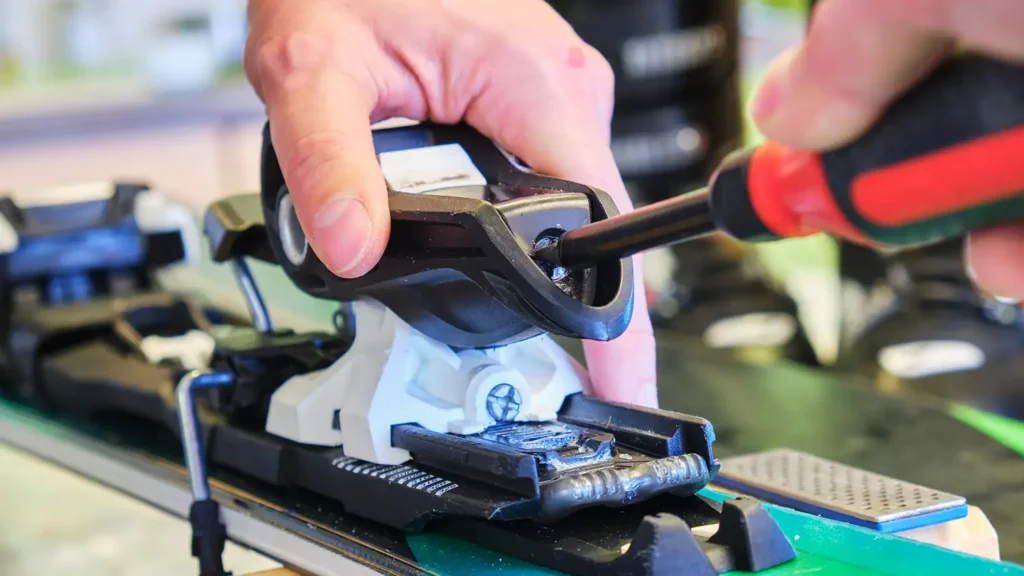
Before you pull your skis out of storage and head for Breckenridge, give your equipment a little attention. Last season’s setup deserves a fresh look, especially if you bought new boots or noticed a problem on your final ski day.
Professional ski adjustments help confirm that your equipment is set up for you and the boots you’ll actually wear. A preseason inspection can also identify damage that needs attention before you get on the mountain.
No adjustment or tune can eliminate skiing risks. But checking your gear ahead of time gives you a chance to address equipment concerns without spending your first morning sorting them out.
What Does a Ski Binding Adjustment Involve?
Your boots and bindings work together as a system. A ski binding adjustment involves setting the binding to accommodate a compatible boot and selecting release settings using the skier’s current information.
A technician needs more than your usual shoe size. The boot’s sole length matters, along with its sole type and compatibility with the binding. Bring the boots you plan to ski in so the shop can evaluate the actual combination.
An adjustment and a function test serve different purposes. The adjustment establishes the setup. Testing helps assess how the boot and binding system performs. Ask what the service includes rather than assuming that changing a setting completes the check.
Avoid copying a friend’s binding settings or turning the adjustment screws because a ski released unexpectedly. Explain what happened to a qualified technician so they can assess the system.
What Has Changed Since Last Season?
You don’t necessarily need different settings every winter. You do need to tell the technician about changes that could affect the setup.
Before your visit, consider these questions:
- Did you get new boots? Bring them with your skis, even if they’re the same size as your old pair.
- Has your weight changed? Provide current information rather than reusing an old rental form.
- Has a child grown? Check their equipment again instead of assuming last winter’s setup still fits.
- Has your skiing changed? Describe your current experience honestly so the technician can help you complete the skier information.
- Did anything feel wrong last season? Mention unexpected releases or difficulty stepping into a binding.
If you’ve bought used skis, have them evaluated before skiing on them. The previous owner’s setup isn’t a starting point you should simply adopt.
New Boots Deserve a Binding Check
A boot can click into a binding without being an appropriate match.
For example, replacing an older alpine boot with a GripWalk boot raises a compatibility question. A technician should confirm that the binding accepts the new sole type before making adjustments. An adjustment cannot make an incompatible combination suitable. Manufacturer guidance is specific to the equipment involved.
Even two boots sold in the same size can have different sole lengths. That’s why bringing the actual boots matters more than describing them over the phone.
Boot fit deserves attention too. Try yours on with the ski socks you intend to wear. If your heel lifts noticeably or you feel persistent pressure or numbness, have the fit assessed before your trip. Tightening every buckle harder isn’t a good solution to a poor fit.
Check Equipment Condition Before Packing
A quick look at home can help you spot reasons to visit the shop. It doesn’t replace a professional binding inspection, but it gives you useful information to share.
Look for:
- Base damage: Deep gouges deserve attention, particularly if the ski’s core is exposed.
- Edge damage: Note heavy rust or an edge that appears bent or separated.
- Binding damage: Cracks or visibly loose components call for professional evaluation.
- Boot damage: Check for cracked shells and heavily worn soles.
- Changes in the ski itself: Point out any separation between layers or damage from an impact.
Carvers’ existing maintenance guidance recommends checking skis before the season and between trips. If you find significant damage, have it evaluated before using the equipment.
Tell the shop about problems you can’t see, too. “This ski kept coming off during ordinary turns” is worth mentioning even if the binding looks fine on your workbench.
Do You Need a Ski Tune Before the Season?
Binding work and ski tuning address different parts of your equipment.
A binding check focuses on the boot and binding system. A tune addresses the ski’s running surfaces. Waxing helps with glide, while edge work can improve grip on firm snow. Base repairs address damage underneath the ski.
The right service depends on the current state of your gear. Skis that were serviced before storage may need less work than a pair put away after a full season of use. You don’t have to choose the most extensive tune before anyone has looked at them.
At Carvers, our Ski Repair page explains the available options, from waxing to full tunes with base repair. We can help you determine which service fits your skis’ condition.
When arranging service, ask about binding inspection separately. Don’t assume that a wax or edge tune includes binding adjustment and testing.
Plan Your Shop Visit Before Your First Ski Day
October is a useful time to pull out your equipment and decide what needs attention. If you’re traveling to Breckenridge later in the winter, arrange the check before departure or leave time for service after you arrive.
Bring both boots with your skis. Have your current skier information ready and explain any concerns from last season. For older bindings, call ahead with the model information so the shop can confirm whether it can service them.
You can explore our Tuning & Repair services before your visit. Ask about current turnaround times so your plans allow for any work your equipment needs.
If your own skis need repairs or you’d rather rent for the trip, take a look at our Ski Rentals. You can book ski rentals online and review our rental FAQ before pickup. Let the rental team know if you’re bringing your own boots so they can check the setup with them.
Where can I get ski adjustments in Breckenridge?
Contact Carvers Ski + Bike at 970-453-0132 or visit us at 203 N. Main Street. Tell us which bindings you have and what you need checked so we can confirm service options for your setup. Our shop also offers ski tuning and repair when your equipment needs additional attention.
Before your first run, give yourself time to get familiar with your equipment again. If something doesn’t fit or function as expected, stop and have it checked. We’re happy to help you work out the next step.
Frequently Asked Questions
What is a ski binding adjustment?
A ski binding adjustment sets the binding for a compatible boot and the skier’s current information. Professional service may also include inspection and function testing, so ask what is included when you book.
How often should ski bindings be adjusted?
Have the system checked before each season and whenever you change boots or relevant skier information. An inspection doesn’t automatically mean the settings need to change. Follow the manufacturer’s service guidance and the technician’s recommendations for your equipment.
Should I have my skis checked before the season starts?
Yes. A preseason check gives you time to address equipment concerns before your first day. It’s especially useful after a long period in storage or if something felt wrong the last time you skied.
Do new ski boots require binding adjustments?
New boots require a compatibility and setup check. Whether an adjustment is needed depends on the boots and bindings involved. Bring the new boots with your skis, even if the size hasn’t changed.