

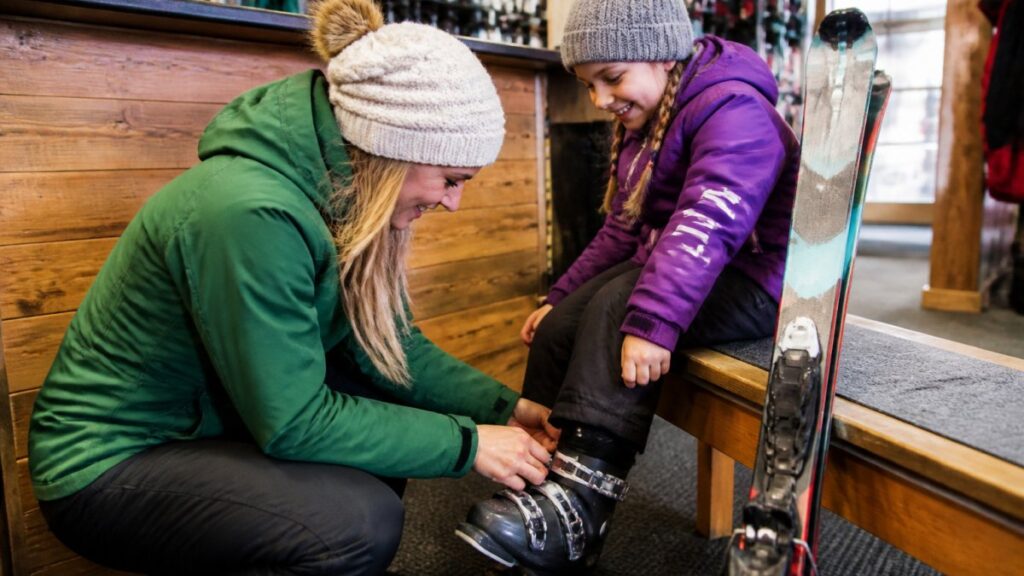
Quick Summary
A kids ski rental package with boots bundles skis, boots, and poles into one rate, and some add a helmet, depending on the shop and the child’s age. Fit is matched to height, weight, and skill level, so confirm exactly what is covered before paying. Measure the child’s foot in centimeters, since ski boots are sized by mondopoint rather than shoe size.
- Confirm whether a helmet is included, since packages vary by shop.
- Measure the foot in centimeters and use the longer foot for sizing.
- Wear one pair of thin or medium ski socks during the fitting.
- Do not size up, because a loose boot reduces control on turns.
- Ask whether size swaps are free, especially for multi-day or season bookings.
Table of Contents
- What a Kids Ski Rental Package With Boots Usually Includes
- Kids Ski Boot Sizing: How to Get the Right Fit
- Choosing a Kids Daily Ski Rental Package
- Kids Season Ski Rental Package: When It Makes Sense
- Ski Rental Package for Beginners: Gear, Helmets and Extras
- Reserving, Picking Up and Returning Your Kids’ Rental Gear
- Booking Your Kids’ Rental Package Before Your Breckenridge Trip
- Frequently Asked Questions
What a Kids Ski Rental Package With Boots Usually Includes
A kids ski rental package with boots typically bundles skis, boots, and poles into one rate, so families do not have to book each piece separately. Some packages also add a helmet, though that varies by shop and by the child’s age.
Packages are typically matched to the child’s height, weight, and skill level, not just their age. A five-year-old on their first day needs shorter skis and a softer boot than a ten-year-old who has already spent a season on the bunny hill.
Watch out: a package quoted for one day may not roll over cleanly into a multi-day booking. Ask how the rate changes if you extend.
Kids Ski Boot Sizing: How to Get the Right Fit
Boot fit is the single biggest comfort variable in a kids’ rental package, and it is the piece most parents get wrong. A loose boot lets the foot slide and the ankle roll, which makes edging and turning harder. A tight boot creates pressure points within a few runs and can end a child’s day early. The goal is a snug, evenly loaded fit, not room to grow. Properly fitted footwear works in tandem with high-performance ski jackets for kids to maintain the core warmth and stability necessary for a full day on the mountain.
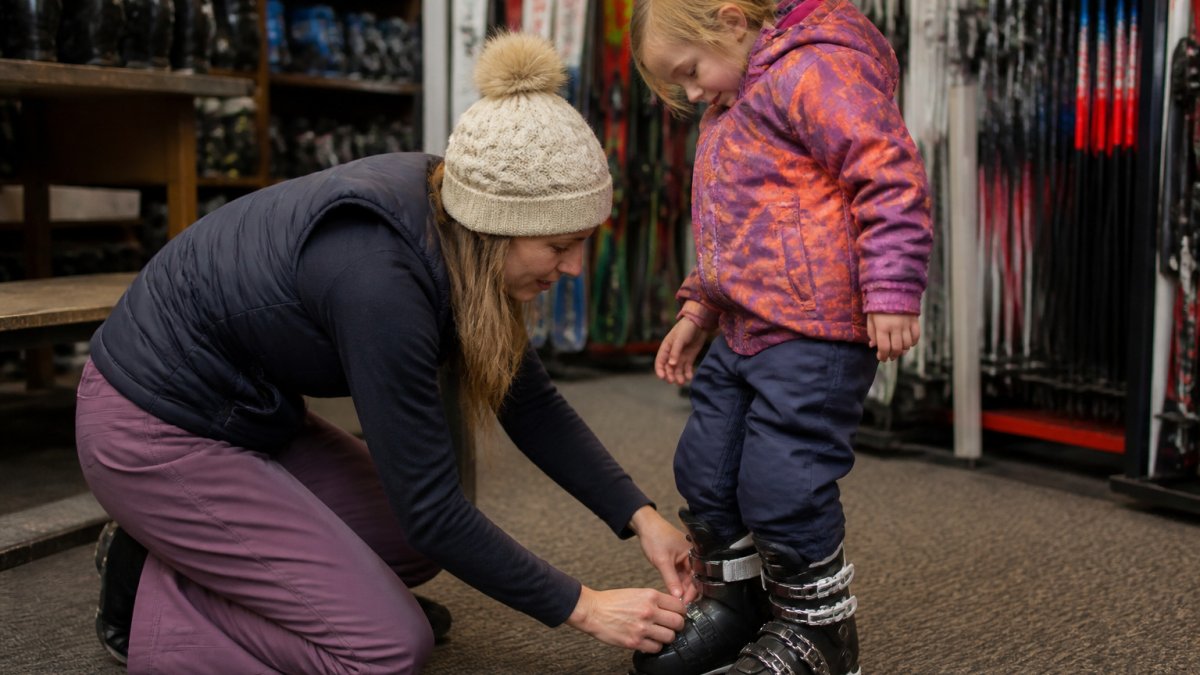
Measure the foot, not the shoe size
Ski boots are sized in mondopoint, which is the foot length in centimeters. Shoe size is a poor proxy because brands differ and kids’ street shoes carry growing room that ski boots must not.
- Have the child stand on a sheet of paper with weight on both feet, heels against a wall.
- Mark the tip of the longest toe (often the second toe, not the big toe).
- Measure heel-to-toe in centimeters for each foot and use the longer one.
- Round up to the nearest half centimeter and give that number to the fitter.
A common pattern is that parents report a shoe size and the shop converts it, then the boot feels wrong. Bring the measured centimeter length instead. If you do not have it, most rental counters will measure on site in under a minute.
What a correct fit feels like
- Toes: lightly brushing the front of the liner when standing tall, then pulling back slightly when the knees bend into a ski stance. Toes should not curl or jam.
- Heel: locked down. If the heel lifts when the child rises onto the balls of the feet, the shell volume or size is wrong.
- Instep: firm pressure across the top of the foot with no pinching.
- Width: no side-to-side sliding, but no squeezing at the widest part of the foot.
A boot that is one size too big is more common than one too small, because parents size up for growth. In a ski boot, extra length means the foot slides forward on turns, the heel lifts, and control drops. Do not size up. If the child is between sizes, the fitter should try both shells rather than defaulting to the larger one.
Socks and pressure points
Wear one pair of thin or medium ski socks, not cotton, not two pairs. Thick socks change the fit and can bunch under the arch. Bring the socks you plan to ski in to the fitting so the boot is sized around them.
After buckling, have the child stand and flex for two to three minutes, then check these spots: the shin bone, the top of the instep, the outside ankle bone, and the heel. Red marks are normal; sharp pain or numbness is not. If a pressure point appears before you leave the counter, the fix is a different shell, a different size, or a liner adjustment, not a looser buckle. Loosening the buckle to relieve pain usually trades a pressure point for a sloppy fit.
Pro Tip
Ask the fitter to show your child how to buckle and unbuckle the boots. Kids who can adjust their own buckles mid-day are less likely to spend the afternoon in pain.
When to swap the boot
Ask before you book whether the package allows a no-charge boot swap during the rental. Most shops will exchange a size that does not work, but policies vary on used gear and on multi-day bookings. A swap in the first hour is almost always free; a swap after a full day of skiing may not be. Test the fit indoors for ten minutes before you head to the lift, and speak up immediately if something feels wrong.
Use this quick reference to check the key fit points before you head to the lift.
| Fit point | What to look for | Action if wrong |
|---|---|---|
| Toes | Lightly brush the liner when standing tall, pull back when knees bend | Try a different size or shell |
| Heel | Stays locked down when the child rises onto the balls of the feet | Check shell volume or size |
| Instep | Firm pressure with no pinching | Adjust the liner or change shell |
| Width | No sliding side to side, no squeezing at the widest point | Try the other shell |
| Socks | One pair of thin or medium ski socks, not cotton or double layers | Fit boots with the socks you ski in |
| Pressure check | Red marks are normal; sharp pain or numbness is not | Swap shell or size, don’t loosen buckles |
Choosing a Kids Daily Ski Rental Package
A daily package generally suits families who ski a few days each season or who are visiting for a short trip. Daily rentals are usually priced per day, so you pay for the days you use, and rates vary by shop.
When comparing daily packages, check what each one includes, whether a helmet is part of the price, how rates change on weekends and holidays, and whether size swaps are allowed.
Kids Season Ski Rental Package: When It Makes Sense
A season package is generally a single payment that covers a child’s gear for the whole winter. It can suit some families and not others, depending on ski days, growth rate, and how much convenience matters.
The break-even question
Season options are generally priced as a flat winter fee and daily options per day. To compare them, divide the season price by the daily rate you would pay and check that against the number of days you plan to ski.
- If your planned days are fewer than the break-even number, daily rental is cheaper.
- If your planned days are more, the season package wins on cost.
- If you are close to the break-even, weigh convenience and swap flexibility, because those are the tiebreakers.
Do the math with the rates you will actually pay, since weekend and holiday rates can differ from weekday rates. Ask the shop for both season and daily pricing before you decide.
Growth is the hidden variable
Children grow, and a season package only pays off if the gear keeps fitting. Ask two questions before you buy:
- Does the season package include size exchanges during the term? Confirm it in writing.
- Is there a limit on swaps? Ask whether exchanges are capped or carry a fee.
A child who grows a full boot size mid-winter will need a swap. If the package covers it, the season option gets stronger. If it does not, a daily package that lets you re-fit each trip may be the safer choice.
Convenience and consistency
A season arrangement may involve one pickup and one return, depending on the shop’s terms. That removes the rental-counter line on every ski morning, which matters most for families with young children or tight schedules. It also gives the child the same boots and skis all winter, so they build muscle memory instead of re-adjusting to new gear each trip.
Season options involve commitment, so read the cancellation and return terms before you pay.
Watch Out
Season packages are usually non-refundable after pickup. If your winter plans are uncertain, a daily or multi-day package preserves flexibility.
A simple decision rule
- One or two ski days this winter: daily package.
- A short trip of three to five days: multi-day daily package, and ask about a trip rate.
- Regular skiing across the season, child past a growth spurt: season package.
- Regular skiing, child in a fast growth phase: season package only if free swaps are included; otherwise daily.
If you are unsure, ask the shop to quote both options for your planned dates. The comparison takes a few minutes and usually makes the answer obvious.
Ski Rental Package for Beginners: Gear, Helmets and Extras
Beginners generally benefit from gear that prioritizes comfort and easy control, since shorter skis and softer boots are easier to learn on.
Helmets deserve special attention for beginners. Fit matters as much as whether a helmet is included. A helmet that sits too high on the forehead or wobbles when the child shakes their head will not protect them well.
Ask whether extras such as goggles or gloves are part of the package or sold separately so you can budget accordingly. Pack your own warm layers, since rental gear covers the equipment itself, not the clothing.
Reserving, Picking Up and Returning Your Kids’ Rental Gear
Booking online ahead of your trip can help you secure the size and package you want. Carver’s Ski and Bike offers an online booking system for rental equipment.
At pickup, it helps to have the names and approximate heights and weights of every child in the group ready.
Return the gear at the time listed on your rental agreement, and ask the shop about its return and damage policies.
Booking Your Kids’ Rental Package Before Your Breckenridge Trip
Booking ahead gives your family time to compare packages, confirm sizes, and choose between daily and season options without rushing. Reserving early can improve your chances of getting the size your child needs during busy periods.
Before you book, gather the details the shop will ask for: each child’s height, weight, and boot size if you know it, plus the dates and the number of ski days.
Ready to choose your family’s gear? Reserve online at Carver’s Ski and Bike to get started and set up your children for a safe, enjoyable day on the mountain.
Last Updated: October 30, 2026
Frequently Asked Questions
What is included in a kids’ ski rental package?
A kids’ ski rental package typically bundles skis, boots and poles, and many shops add a helmet as an option. Packages are generally priced differently from individual items, so compare what each one covers. Carver’s Ski and Bike has not published package prices in this guide, so pricing depends on quantity, dates and delivery; check the Carver’s Ski and Bike website or request a quote for current rates before you book.
Do kids’ ski rental packages include boots?
Many kids’ ski rental packages include boots, but this varies by shop and package tier, so confirm before you book. Ask whether boots are part of the package or sold separately, and whether the package covers a single day or a full season. Carver’s Ski and Bike offers an online booking system for rental equipment.
How do I choose the right ski boot size for my child?
Start with your child’s street shoe size as a reference, then have a fitter check the boot in person. The boot should feel snug without pinching, the heel should stay planted, and toes should lightly touch the front when the child stands upright. Have your child try boots on with the same socks they will wear on the slopes, and check the buckles for even pressure.
Should kids rent skis for one day or the whole season?
Daily rentals suit families on short trips or children who are still deciding whether they enjoy skiing. Season rentals usually make sense when your child skis several times and needs gear that fits as they grow. Because kids can outgrow boots and skis quickly, ask the shop about its policy on size exchanges during a season rental.
