

If you’ve been relying on universal rub-on wax or occasional shop tunes, it’s time to elevate your game. Mastering the art of ski waxing is the single most effective way to unlock your equipment’s full potential. This guide will take you through the intermediate steps of hot waxing, focusing on the specific conditions you’ll encounter across the varied elevations and snow types at Breckenridge. By taking control of your tune, you’ll feel the difference immediately, turning frustrating drag into effortless flow.
The pristine powder and challenging terrain of Breckenridge, Colorado, demand peak performance from your skis. As you move past the beginner phase and start tackling more complex runs, you’ll notice that the quality of your glide is no longer just a luxury—it’s a necessity for speed, energy conservation, and an overall better experience.
The Intermediate Ski Waxing Toolkit: Stepping Up Your Gear
Before you dive into the process of ski waxing, you need the right setup. If you’ve been using a basic kit, consider upgrading these essentials to match your new intermediate status:
- Dedicated Waxing Iron: Household irons have inconsistent temperatures, which can damage your ski bases. A dedicated ski iron maintains a steady temperature, ensuring optimal wax penetration without burning the base.
- Plexi Scraper & Sharpener: A sharp, flat scraper is crucial for removing excess wax. Use a tool like a scraper sharpener or a metal file to keep the edge perfectly 90 degrees—a dull scraper is nearly useless.
- Brushes: Moving beyond a single nylon brush is key. You’ll want at least two:
- Bronze or Brass Brush: Used first to clean the base structure before waxing, and then immediately after scraping to remove most of the remaining wax.
- Stiff Nylon Brush: Used as a final step to polish and further expose the base structure.
- Vises: A set of ski vises is a game-changer for stability, ensuring your ski stays firmly in place during the entire ski waxing process.
Choosing the Right Wax for Breckenridge Conditions
The core difference between a beginner and an intermediate wax job is moving away from “universal” wax toward temperature-specific glide wax. Breckenridge’s snow conditions are famously diverse, often changing dramatically from a frigid morning on Peak 9 to a sunny afternoon on Peak 6.
The Temperature-Specific Rule for Ski Waxing
Wax performance is primarily dictated by snow temperature. The color coding on wax blocks makes selection relatively straightforward:
- Yellow Wax: For warm, wet, spring snow, generally 28℉ and warmer (> -2℃).
- Red/Violet Wax: This is the most common “all-around” choice, suited for new, mixed, or artificial snow in the range of 14℉ to 28℉ (-10℃ to -2℃).
- Blue Wax: Used for cold, dry, aggressive snow, common mid-winter in Colorado, typically 5℉ to 14℉ (-15℃ to -10℃).
- Green/Black Wax: For extremely cold, dry conditions, below 5℉ (< -15℃).
Intermediate Tip for Breckenridge: The snow often starts cold and dry in the mornings, but as the sun warms the high-altitude peaks, the snow structure changes. A good strategy is to use the Mid-range (Red/Violet) wax as your go-to base, and then adjust based on the current weather forecast. If you’re skiing on a fresh, cold powder day, opt for a slightly harder (colder) wax like Blue to protect your bases from the sharp snow crystals and enhance glide.
Graphite and Base Prep
As an intermediate, you should introduce a graphite-infused wax into your routine. Breckenridge snow can sometimes be “dirty” from wind and traffic. Graphite wax, often applied as a first layer, helps reduce electrostatic friction, which is generated when a clean base drags over dirty or artificially made snow.
For an in-depth understanding of how snow crystals and friction affect glide, we recommend reading this guide on The Science of Ski Wax. Understanding the “why” behind your wax choices will make you a more effective tuner.
The Hot Ski Waxing Process: Precision and Patience
Now that you have your tools and your temperature-specific wax, here is the refined, step-by-step process for a top-tier tune.
Step 1: Base Cleaning and Preparation
- Secure Your Skis: Place your skis securely in the vises, base up.
- Brush: Using your bronze or brass brush, aggressively brush the base from tip to tail a few times. This removes surface dirt, oxidized base material, and any residual old wax, opening up the base structure (the microscopic pores of the ski base) so it can accept the new wax.
- Brake Retainer: Loop a rubber band or brake retainer around the ski brake to hold it out of the way.
Step 2: Wax Application (The Drip Method)
- Set the Iron: Set your waxing iron to the temperature recommended on your wax block. Never let the iron smoke. If it smokes, it’s too hot.
- Drip: Hold the wax block against the iron and let it drip a continuous line of molten wax down the base, starting from the tip and moving to the tail. Aim for a pattern that will cover the entire base once spread.
- Iron: Place the iron flat on the base. Move it slowly and steadily from tip to tail in one continuous, fluid motion. The goal is to melt the dripped wax into a thin, uniform, liquid film that spreads to the edges. Do not stop the iron. If you see steam, you are moving too slow or the iron is too hot. Complete 2-3 passes until the entire base is evenly coated.
Step 3: Cooling and Base Saturation
This is where patience pays off. Allow the wax to cool and harden completely at room temperature for at least 30 minutes, or even better, an hour. This cooling period is critical as it allows the wax to fully penetrate the base material’s pores, ensuring maximum durability and glide.
Step 4: Scraping and Brushing for Optimal Glide
The secret to optimal glide is not in the wax you put on, but the wax you take off. All the excess wax sitting on the surface and obscuring the base structure is slowing you down.
- Groove Cleaning: Use a groove cleaning tool to remove the wax from the central groove of the ski.
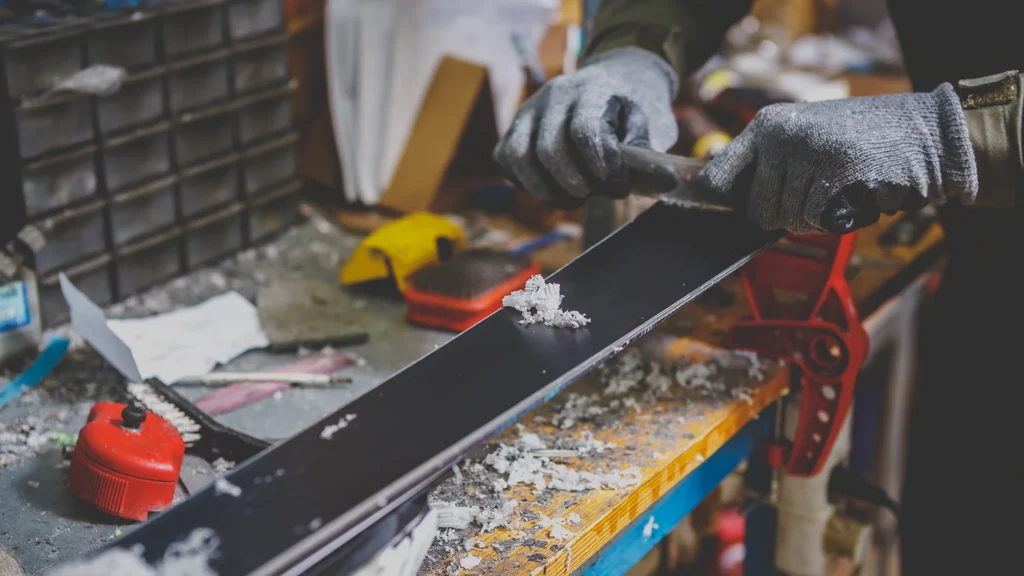
- Scraping: Using your sharp plexi scraper, scrape the base from tip to tail, applying firm, even pressure. Scrape in overlapping, continuous strokes. You should see thin curls of wax peeling off. Keep scraping until you can barely see any surface wax remaining, and the base material starts to look dark and shiny again. Remember to clean the edges too!
- Bronze/Brass Brush: Use your brass or bronze brush from tip to tail. This hard-bristled brush removes most of the residual wax from the base structure.
- Nylon Brush: Finish the process with the stiff nylon brush, brushing from tip to tail 10-15 times. This step finishes the polish and fully exposes the base structure, ensuring the fastest possible glide.
Waxing for Longevity and Performance: When to Tune
The question of how often to wax is dependent on the conditions and the amount you ski. For intermediate skiers tackling Breckenridge’s varied terrain, follow these guidelines:
- Rule of Thumb: Wax every 3-5 days of hard skiing.
- Dirty Snow/Variable Temps: If the snow is visibly dirty, icy, or going through extreme temperature swings (e.g., spring skiing), consider a light wax after every two days.
- Storage Wax: At the end of the season, apply a thick coat of a soft, universal wax (don’t scrape it off!) to protect the bases from oxidation over the summer. Scrape it off before your first day next season.
Ski waxing is not just maintenance; it’s a performance enhancer. A well-tuned ski glides faster, is easier to turn, and saves you energy on those long Breckenridge runs. By moving past the basics and adopting a temperature-specific, process-focused approach, you are investing in a superior on-mountain experience.
Ready to gear up for your next tune? Stop by Carvers Ski Shop today to explore our full line of dedicated waxing irons, temperature-specific waxes, and essential brushes, and get personalized advice from our expert technicians!