

Whether you’re carving corduroy on a crisp bluebird morning or charging through fresh powder, every mountain enthusiast knows one thing is true: well-maintained gear makes all the difference. At the heart of great performance (and more fun on the slopes) is knowing the essentials of ski repair. From sharpening edges and waxing bases to quick fixes that get you back to cruising, mountain lovers who prioritize gear care are the ones who enjoy more confidence, speed, and control with every run.
In this guide, we’ll explore practical ski repair techniques, maintenance habits, and pro tips that will help you keep your skis performing at their peak — whether you’re prepping for your first run or storing them for the season’s end.
Why Ski Repair Matters More Than You Think
Skiing well isn’t just about skill; it’s also about equipment that responds when you need it most. Regular ski repair and maintenance directly impact your ski’s glide, edge hold, and overall longevity. If bases are dry and dull or edges are nicked and rusted, you’ll notice it on the snow: slower glide, unpredictable turns, and less enjoyment overall.
A good tune and repair routine improves:
- Control and stability on groomed runs and variable snow
- Speed and glide efficiency by minimizing friction
- Safety, because worn edges and damaged surfaces can compromise handling
- Equipment lifespan, so you get more seasons out of your skis
Luckily, many maintenance tasks can be done at home, and others are quick jobs for your local ski shop. Combine both for the best results.
Inspect Before You Hit the Slopes
Before any ski repair or tune, inspection sets the stage. Take a few minutes before each season and in between trips to check your gear for visible wear and tear.
What to look for:
- Scratches, gouges, or dry patches on the bases
- Rust, burrs, or dull spots along the metal edges
- Loose binding screws or rust on hardware
- Signs of corrosion from moisture
Dry your skis after each day on the mountain. Moisture left on edges and bindings can speed up corrosion, which only makes your next tune harder.
Base Repair: Handling Scratches and Gouges
The base of your ski takes a beating season after season from abrasive snow, rocks, and trail debris. Small scratches are common but manageable, while deep gouges sometimes require more attention.
Quick base repair steps:
- Clean the area so you can clearly see the damage.
- Fill gouges with a P-tex candle or base repair stick and let it cool.
- Scrape the area flush with the surrounding base.
For extensive damage — especially if the core is exposed — it’s best to let a professional handle the repair.
Ski Repair Essentials: Sharpening Edges for Better Control
Edges are one of the main contact points between you and the snow. Sharp, well-maintained edges improve grip on icy terrain and create smoother, more confident turns.
A simple edge tune includes:
- Cleaning and drying the skis thoroughly
- Removing burrs or rust with a diamond stone
- Maintaining a consistent bevel angle while working tip to tail
If you’re unsure about filing or beveling, start with light deburring and leave advanced edge work to a shop to avoid removing too much metal.
Waxing Basics for Ski Repair: Keep Your Glide Alive
Waxing is one of the most impactful ski repair tasks you can do yourself. Wax protects the base from drying out and improves glide, helping you ski faster and more smoothly.
A basic waxing routine:
- Clean the base to remove dirt and old wax.
- Melt wax onto the ski using a waxing iron.
- Let the wax cool, then scrape off the excess.
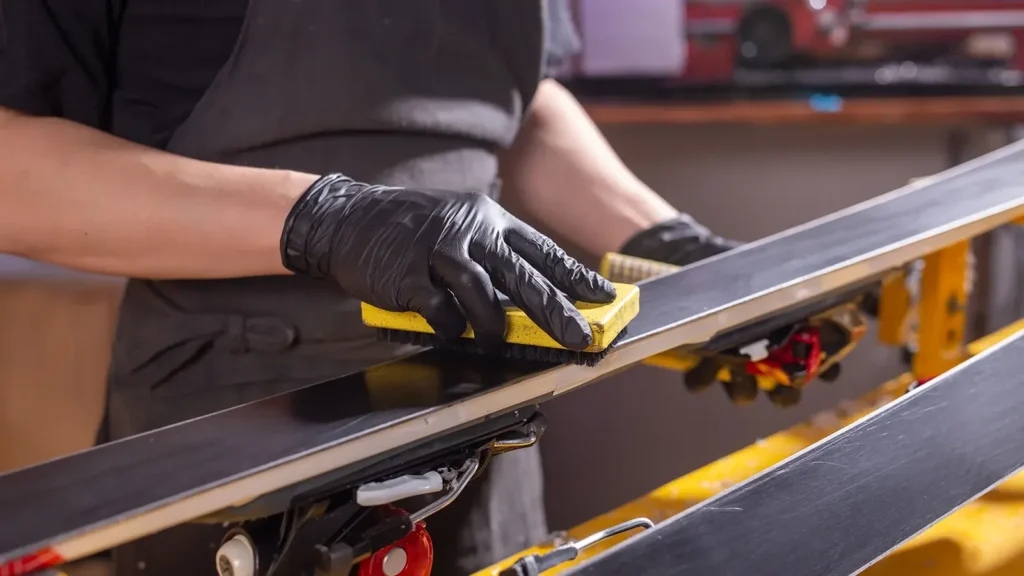
- Brush and buff the base to reveal structure.
Wax every few ski days — or at least monthly — to keep your skis performing their best.
For a helpful overview of waxing and tuning basics, this REI ski maintenance guide is a great resource.
Bindings and Hardware: Don’t Overlook the Details
While bases and edges get the spotlight, bindings and hardware are just as important. Loose screws, worn parts, or corrosion can affect how safely your bindings release.
Be sure to check:
- Binding release settings
- Screw tightness
- Rust or corrosion on metal components
If anything looks off, a quick shop visit can ensure your setup is safe and dialed in.
Store Your Skis the Right Way in the Off-Season to Avoid the Need for Ski Repair
End-of-season ski repair and storage prep can save you time and money next winter.
Off-season storage tips:
- Clean and dry skis completely
- Apply a thick layer of wax without scraping it off
- Loosen bindings slightly
- Store skis in a cool, dry place away from sunlight
This protects your bases and edges while your skis are off the snow.
When to Bring Your Skis to the Pros
DIY ski repair goes a long way, but some jobs are better left to professionals:
- Deep base damage
- Major edge reshaping
- Binding adjustments
- Full pre-season tune-ups
A professional tune restores performance and gives you peace of mind before you hit the mountain.
Keep Your Skis Ready for Every Run
Consistent ski repair keeps your equipment performing the way it should — smooth, responsive, and reliable. From quick base fixes to waxing and edge tuning, taking care of your skis means better days on the mountain and fewer surprises mid-season.
Ready to get your skis back in top shape? Stop by Carvers Ski Shop for expert ski repair, tuning, and service. Our experienced technicians will make sure your gear is mountain-ready. Schedule your tune-up today and ski with confidence all season long.